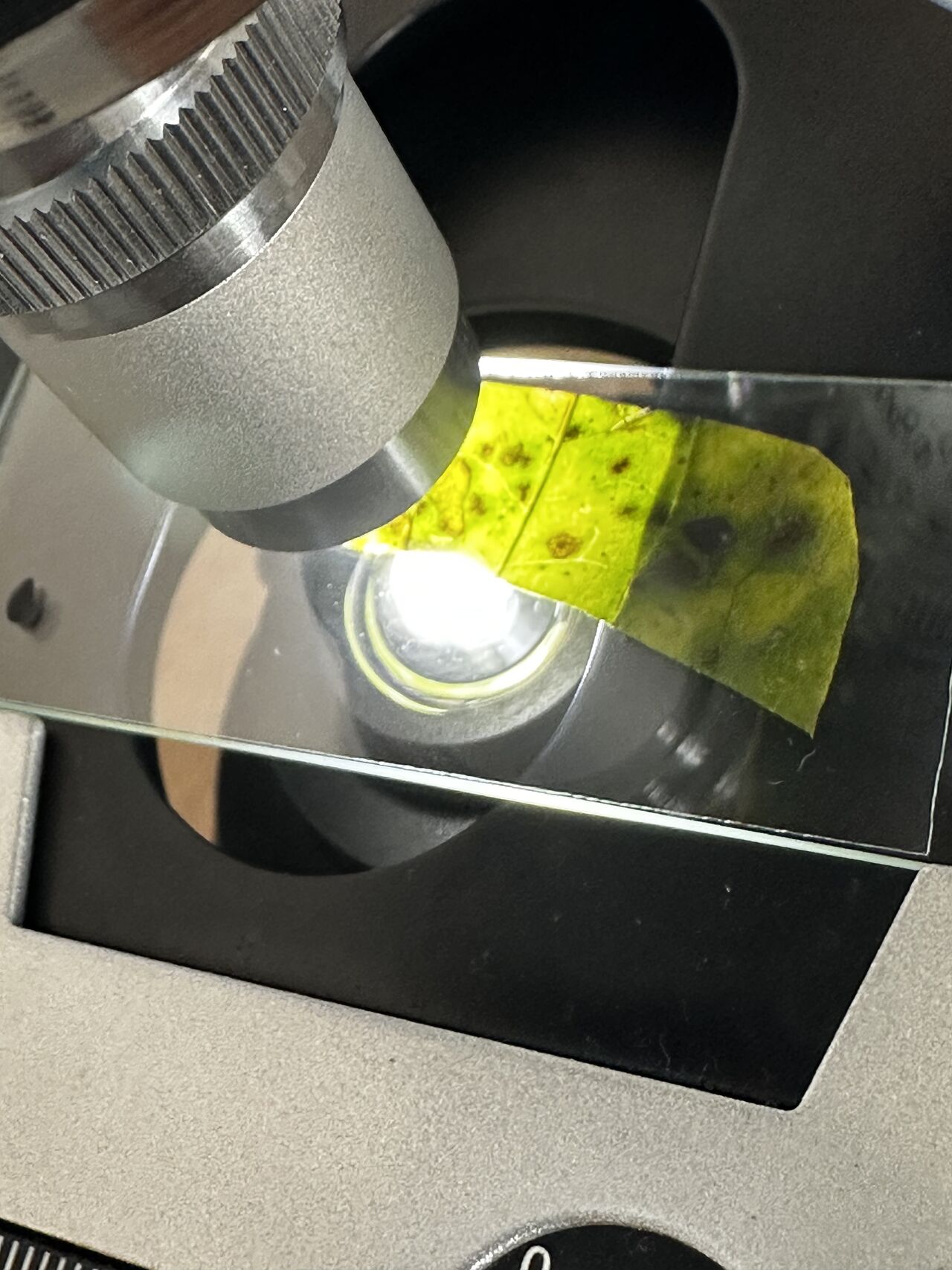
My daughter brought home a leaf from daycare. Speckled, she said. She wanted to look at it under my “telescope.”
I corrected her – it’s a microscope, for looking at small things. Those specks looked like a fungus infection. When we stared at the screen together, she went quiet for a moment, then said it looked like a painting.
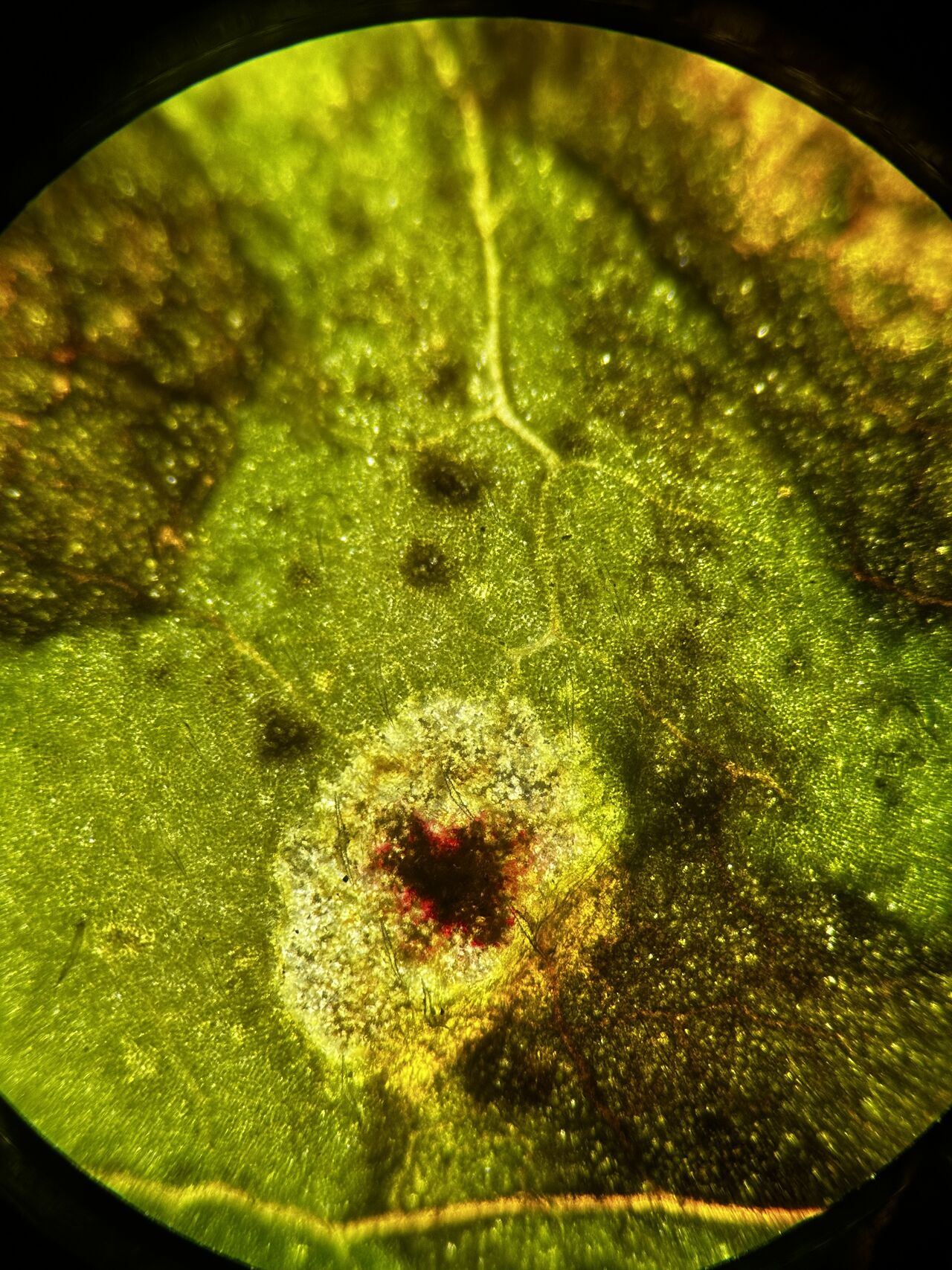
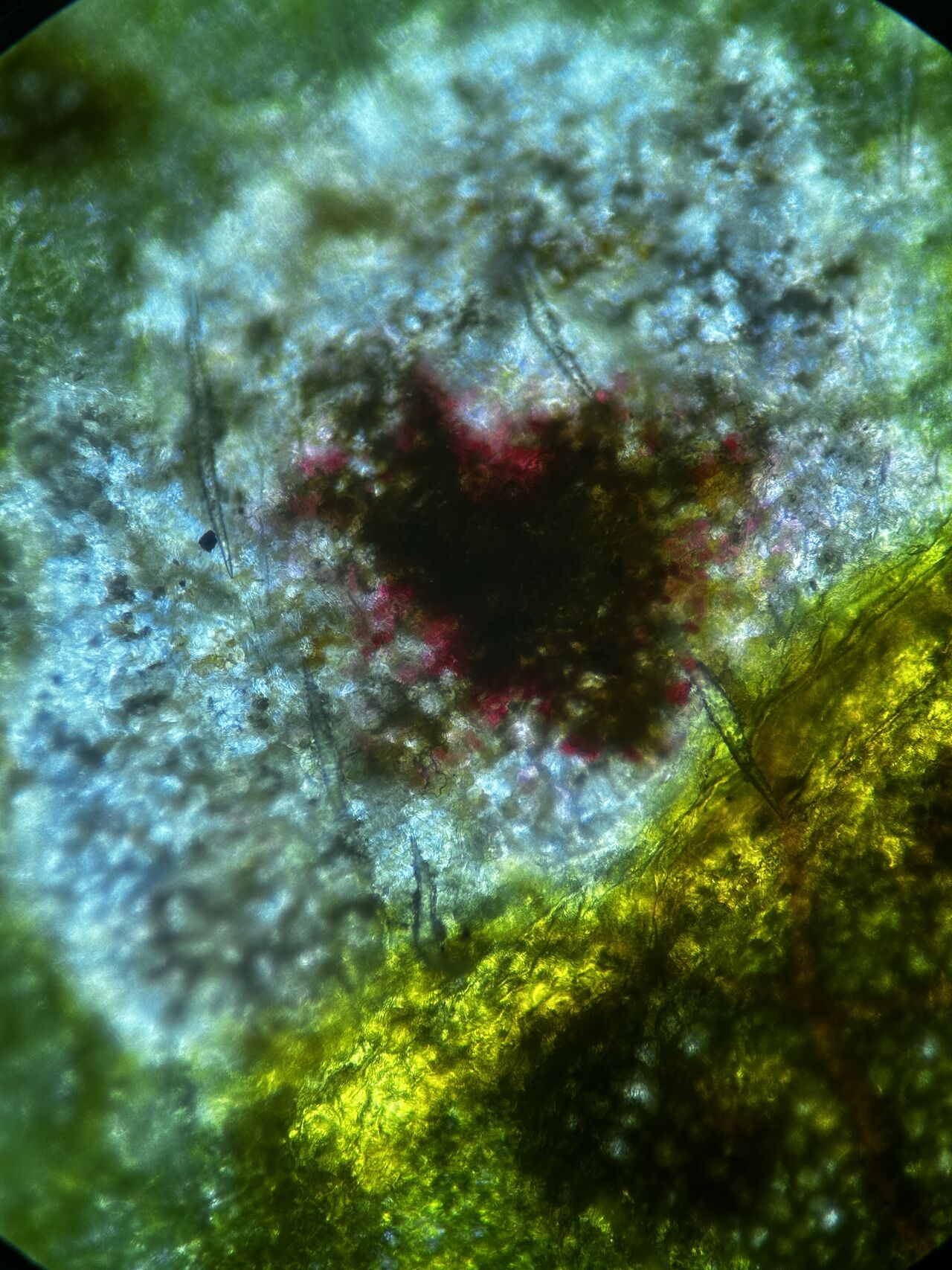
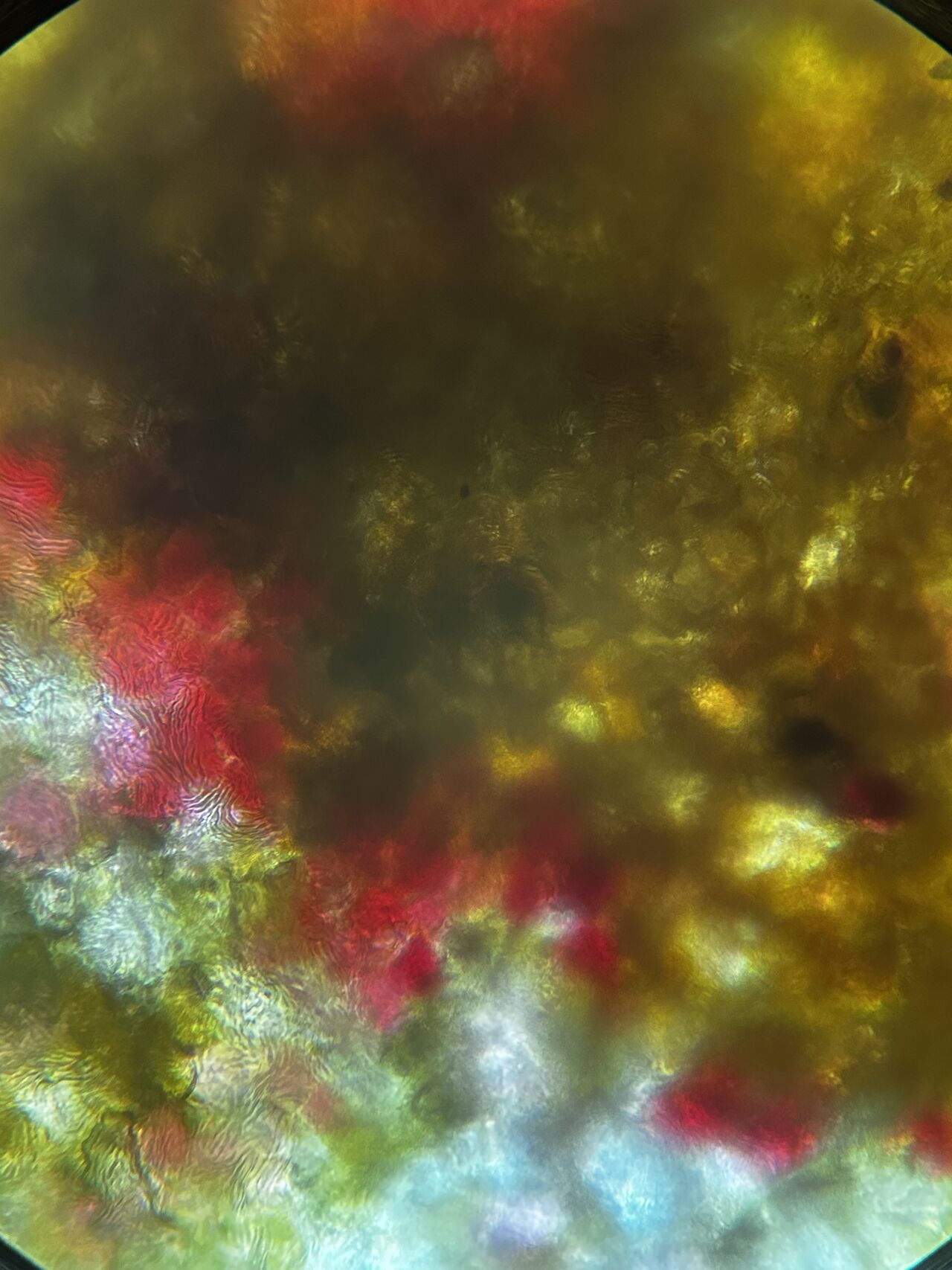
She was right. The invisible world is beautiful. But here’s what struck me most: she’d been carrying that leaf around all day, completely unaware of the universe living on its surface. The moment she could see it, everything changed.
That’s exactly what happened to me with compost. Composting became a rabbit hole I couldn’t climb out of.
Once you’ve been down there with the microbes, you never see the world the same way again.
And honestly? That’s exactly where I want you to be.
The Problem With Magic Tricks
Compost is as close as people can get to magic. Magic is an optical illusion – something hidden, happening. Most eyes have never seen microbes. Incomprehensible. Yet it’s all right there, happening under our noses.
The trouble with invisible magic is that people stop believing in it. Or worse, they never believe in it to begin with.
I’ve spent thousands of hours raising awareness about composting, food waste diversion, and soil microbes. It’s more than just marketing for me. It’s my passion. And while it feels strange to draw these connections, that’s just how my brain works – always connecting dots, recognizing patterns. I’m helping facilitate pattern changes. It’s slow, difficult work.
Because here’s the fundamental challenge: microbes can’t post on the internet.
Think about that for a second. If they could, this would be so much easier. An amoeba could post photos of its recent meal of bacteria:
“Look at all these tasty gram-negative bacteria I just found grazing.”
A microbe getting ready to divide could share:
“Oh guys, I am feeling so stretched out, I am about to split again.”
But they can’t. So we have to do it for them.
That’s why I’ve posted over 1,360 times on LinkedIn about composting. Through that, I’ve made microbes visible, found community, customers, and knowledge. I’ve been invited to five continents to work with market leaders in compost equipment and systems.
People call me “The compost professor” even though I’m not a professor at all – just someone who refuses to let the invisible world stay invisible.
Microbes: What You’re Not Seeing
Remember the cat Orion from Men in Black? The one who carried an entire universe in a gem on its necklace? That’s a spoonful of compost.
A billion microbes per gram. At a billion microbes per gram, there sure are a lot of heads – even if most microbes don’t actually have one.
Can you extrapolate from a spoon? Probably not. There are approximately 155,116 teaspoons in a cubic yard. Do the math on how many organisms are contained within one cubic yard of compost. Do you know how many zeros are in a quadrillion?
It’s a parallel universe. More microbes in that spoonful than people on planet Earth. An entire civilization working, eating, dying, and being reborn while you’re reading this sentence. It’s unimaginable for most brains, so it goes mostly unnoticed.

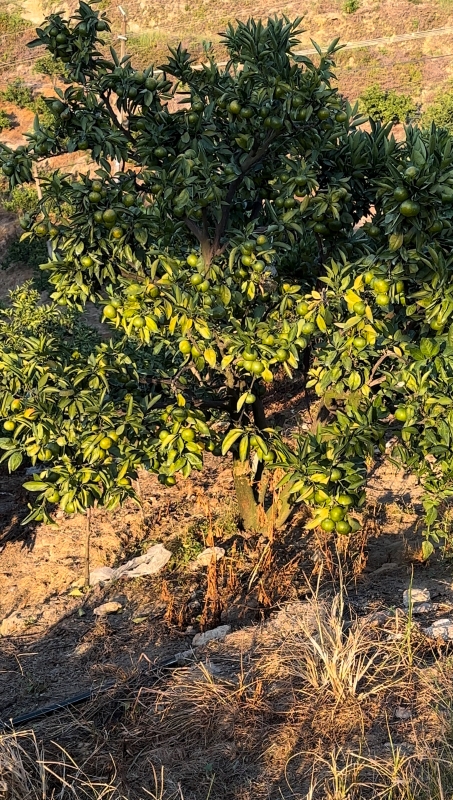
This invisibility has real consequences. When I visited an orange orchard recently, the fruit still shimmered grey-blue with a thin film of insecticide. The owner’s son gathered a bucket, and they started peeling and eating. All I could see was the hands of my new friends getting coated in insecticide as they happily munched.
I felt like a bat using infrared vision – like I could see something they couldn’t. I saw more than just the coating touching their fingers and lips. I saw the brown soil from the herbicide they use to weed under the orange trees. I thought about the sheep that could graze there instead, eating the weeds and fertilizing with their dung and urine. I thought of the second income stream the farmer could gain from selling the meat, along with the reduction in his $450 per acre input costs.
I pointed toward the oranges when they asked me why I wasn’t eating. “Please, you need to wash them.”
Then I pulled out my phone to show videos of nematodes, amoebas, fungi, and bacteria. We talked all night.
Once you can see the invisible world, you can’t unsee it. The question is: how do you show others?
The Day Everything Changed for Five Farmers
I met up with a group of local farmers in Germany who had never used a microscope to look at their soil or compost. They’re all interested in healthy soil, and one of them has started making compost. He has a windrow on the side of his field and a Johnson-Su bioreactor in his yard.
He’d also had some friends drop off samples beforehand, so we had eight bags of different composts on his kitchen table and five pairs of eyes staring at my screen.
We started with the windrow compost from horse manure. Immediately, we saw bacterial activity – these tiny organisms flowing through the water like a living river. The farmers leaned in closer. Then we switched to the Johnson-Su sample, and there they were: long, beautiful fungal hyphae stretching across the field of view like highways through an ancient forest.
“How long is that thread?” one of them asked.
“That single hypha could extend for centimeters,” I said. “They’re creating the structure of your soil.”
To my surprise, we didn’t find any nematodes in the samples. But then, in the Johnson-Su compost, something else appeared on the screen.
A tardigrade.
Even if you don’t understand German, you’d hear the excitement in my voice on the video I took. I’d seen water bears before – found them in moss – but never in compost until that moment. This tiny eight-legged creature, nearly indestructible, was lumbering across our field of view like a microscopic astronaut.
The farmers went silent. Then one of them said: “I’ve been spreading compost for years. I never knew.”
Tardigrades are excellent biomarkers, indicating wide biodiversity and proper moisture and oxygen levels. Finding one means your ecosystem isn’t just alive – it’s thriving. That farmer’s Johnson-Su bioreactor wasn’t just producing compost. It was producing a complete, functioning universe.
The farmers learned from me what testate amoebas, fungal hyphae, and spores look like under the microscope. How to do a squeeze test for moisture. Why logging compost temperatures matters more than just measuring them. But more importantly, they learned to see what was invisible before. One of them said this microscopy session was eye-opening.
That’s my mission: to raise awareness. Sometimes the “organic vs. conventional” debate gets in the way, but I’ve seen firsthand that many conventional farmers go the extra mile, even if certification isn’t feasible due to cost, paperwork, or regulations. These farmers care deeply about their soil and what’s happening beneath the surface. They just needed someone to translate the invisible world for them.
What Dead Microbes Teach Us About Life
Here’s something that sounds contradictory but changed how I think about everything: dead microbes keep the planet alive.
Stay with me on this. Plants capture carbon through photosynthesis – that part everyone knows. But what happens next is where it gets interesting. Plants pump simple sugars down to their roots, feeding the microbes that live in the soil. These microbes eat, grow, and multiply. Then they die.
And when they die, their carbon-rich bodies don’t just disappear. They bind to minerals and become stable organic matter that can persist for decades or centuries. Microbial necromass – the scientific term for dead microbial cells – is one of the most stable forms of carbon stored in soil.
Dead microbes = living carbon. They don’t just recycle carbon. They stabilize it. They’re the builders that turn photosynthesis into soil.
Think about the difference in timescale. A tree takes decades to mature and sequester meaningful carbon. A microbe replicates in minutes to weeks. That means when the soil food web is supported – when you have the right conditions – microbes can rapidly scale carbon capture in ways that trees simply can’t match.
This is why I get frustrated when people reduce compost to NPK numbers. “What’s in your compost? What are the nitrogen-phosphorus-potassium values?” I tell them: compost is a delivery system for microbes, minerals, and moisture. Yes, there are nutrients. But reducing compost to NPK is like reducing a symphony to a list of instruments. You’re missing the music.
Humans are made of approximately 30 trillion human cells. We also host 30+ trillion microbial cells on and inside our bodies. We can’t survive without them – they enhance the human parts of us, help us digest food, protect us from pathogens, even influence our moods and behaviors.
Compost is no different. It’s organic matter plus trillions of microbes – living, breathing, metabolizing, multiplying. It’s not just materials thrown together. It’s a higher-order system. A dynamic, evolving superorganism.
When the word “compost” was coined, microscopes didn’t even exist. Imagine trying to explain all this without seeing a single microbe. No wonder people are confused about what compost actually does.
The Invisible Workforce
Microbial-driven farming is on the rise, and the more microbes we can cycle through our soils, the better for soil health, food quality, and the climate. Composting is one key tool in this process, but understanding why requires seeing what most people miss.
Microbes are the AI of the soil – except their system has been running flawlessly for billions of years, and there’s nothing artificial about it. They are the invisible workforce behind carbon sequestration. They are the indisputable drivers of composting. We composters? We’re just the pit crew. They do the racing.
Every compost pile is a complex, living exchange, far more intricate than any financial market. The microbes are trading, working, building 24/7. They never sleep, never take vacations, never ask for raises. While we track NPK values and pH levels, they’re performing jobs we barely understand: mining minerals from rock particles, trucking nutrients through soil, healing plant roots, defending against pathogens, and catering exactly what each plant needs when it needs it.
Here’s how it works: Plants harvest sunlight and convert it into energy. That energy is funneled to the roots through the liquid carbon pathway, where it’s used to provide simple sugars to microbes in exchange for minerals and nutrients.
Microbial catering is like an a la carte menu for plant roots. No force feeding. No leaching of nutrients. The nutrients are “made fresh daily.”
If force feeding a duck to make foie gras is harmful to the duck – and it is, causing unnaturally enlarged livers, stress, fractures, infections, and injuries – do we really think force feeding plants with synthetic fertilizers is without consequences for their health and vigor?
This gets to something deeper about how we’ve disconnected from natural systems. I’ve noticed how children talk about “farming coins” in educational apps, applying gamer language to homework. They understand digital value exchange better than they understand the real value exchange happening in every handful of soil. The virtual world, which used to be an escape, is now anchored back to reality through real money – while the real world’s value systems become increasingly invisible.
Nature didn’t need money because its value exchange is always more immediate. Compost showcases this direct value exchange perfectly. What looks like a dying, rotting piece of fruit is just the beginning. The matter decays, offering itself up to the first microorganisms to consume. These microbes and their waste will soon be consumed by other microbes. Even plant roots consume microorganisms, first inviting them close and then capturing them inside their roots.
It’s not always harmonious – money is used in conflicts and imbalances, and the same happens in nature. But the system works. It’s been working for billions of years.
Learning to See
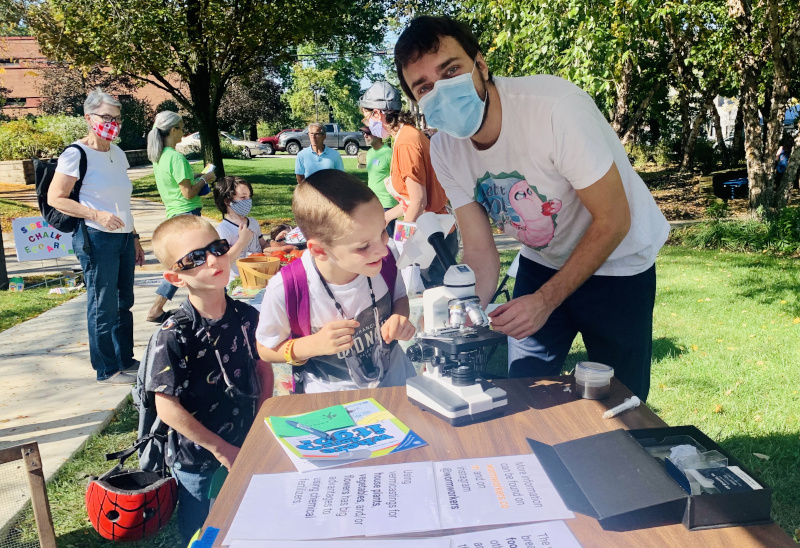
So how do you actually see this invisible universe? The answer is simpler than you might think. You don’t need a PhD. You need curiosity and a microscope.
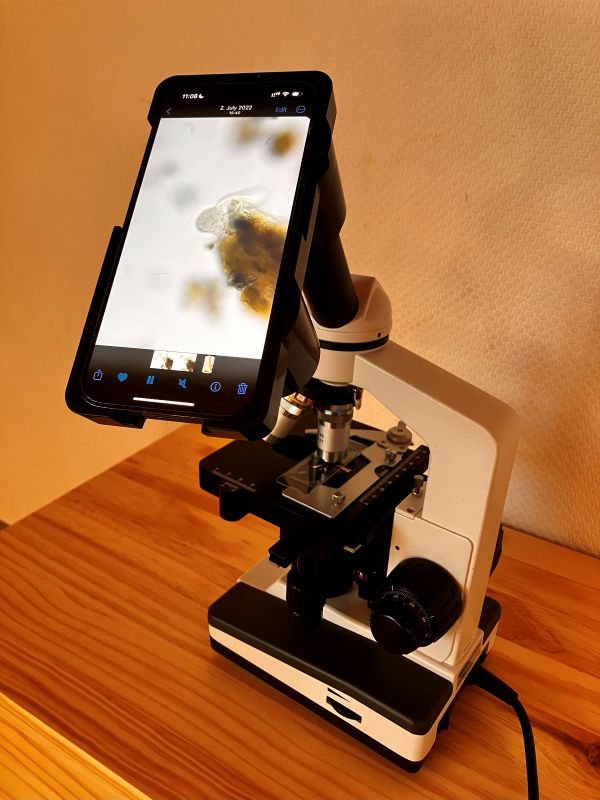
Here’s what I use: a compound microscope with three main lenses: 4x / 10x and 40x. That’s plenty to start. My setup is a LW Scientific Student Pro Monocular in combination with an iLab Cam adapter for my iPhone.
This microscope only has one eye piece to look through and with the adapter I don’t have to squint my eyes.
The microscope has a 10x eye piece (also called an ocular lens) and my adapter has its own 15x optics – which upgrades my 40x 10 to a 40 x 15. These numbers are the values for lens and eye pieces and you multiply them to get your enlargement. That is how I end up with magnification between 60x and 600x.
When it comes to professional microscopes you can easily spend four to five thousand dollars to get a decent soil microscopy setup. I hope there will be even better microscopes in the future!
I am a big proponent of getting started and being able to microscope, so I am encouraging you to get a used microscope or something for less. It doesn’t have to be thousands of dollars and we need more people who do this as a hobby and for their curiosity.
Besides the microscope, you’ll also need microscope slides and cover slips, a dropper or pipette, water, and your compost sample.
Take a small pinch of compost – active, moist compost works best. Mix it with distilled water and dilute it 1:5 or 1:10. Then apply a few drops on a slide. Place a cover slip on top. Start at low magnification and work your way up.
What you’re looking for:
Movement indicates life. Bacteria buzzing around. Amoebas hunting, their bodies morphing as they chase prey. Nematodes wriggling through the landscape like tiny snakes. This is what alive looks like.
Diversity is good. You want to see many different organisms. A healthy compost should be a busy city, not a ghost town. Monocultures are fragile, whether you’re talking about farming or microbes. You might also come across micro arthropods like springtails.
Fungal networks suggest maturity and structure. Those long threads – hyphae – are the interstate highway system of your soil. They transport water and nutrients over distances that bacteria simply can’t manage. In a Johnson-Su bioreactor, you’ll see particularly long, beautiful hyphae.
Compost with a complete soil-food-web includes bacteria, fungi, protozoa, nematodes and micro arthropods.
When I scope compost, I’m not just looking for plastic contamination or quality markers. I’m checking in on the invisible workforce. Are they thriving? Do they have what they need? Are they diverse and active?
8,000 and more species in one sample
Most people think that worms eat our leftovers in vermicomposting, but that’s not what happens. Microorganisms start decomposing the food waste first. The worms eat the microbes. This speeds up the process and makes it simple to turn food waste into high-quality soil amendment. The worms are harvesting the invisible workforce, concentrating their benefits, and leaving behind castings packed with beneficial organisms.
When I add water to my deep litter compost from the chicken coop in spring, all the microbes spring into action and the pile gets hot within a few days. The thermophilic phase with temperatures above 160°F sanitizes pathogens. For three weeks I turn the pile every 2-3 days to aerate it and check the moisture levels. I’m not just managing materials – I’m managing relationships between billions of organisms.
Every method of composting – windrow, vermicomposting, Johnson-Su, deep litter – is really just a different way of creating the right conditions for microbes to thrive. Composting is all about context – each context has its compost.
The Yogurt Connection
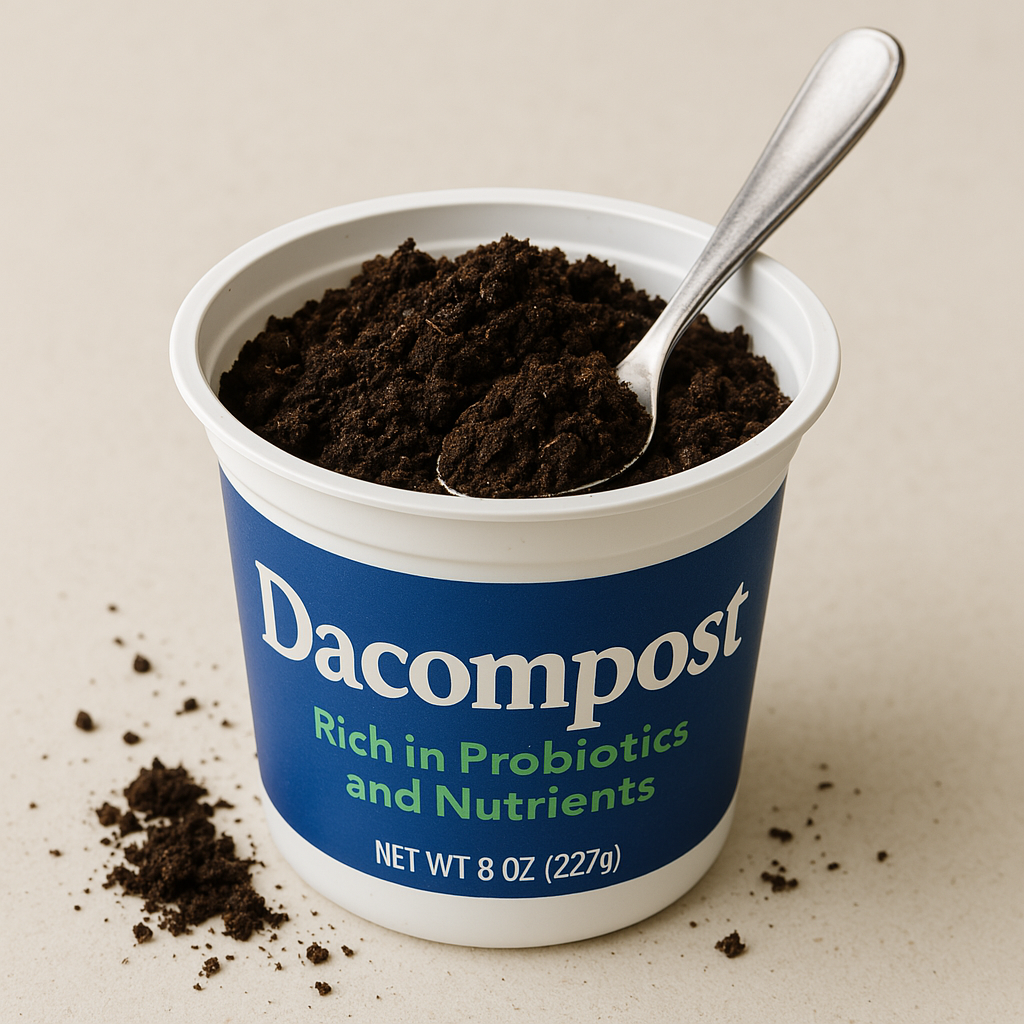
Composting is like making yogurt. Okay, they’re not exactly the same – one needs oxygen, the other doesn’t. But both rely on microbial transformation.
Yogurt equals milk plus bacteria, which yields creamy probiotic goodness. Compost equals scraps plus microbes plus oxygen, which yields nutrient-rich soil food. They’re both the result of invisible life doing its job. They’re both alive. And they both prove that decay can be delicious – or at least, deeply nourishing.
You can buy both compost and yogurt at the store, but you can also make both at home. All it takes is knowledge and the will to do it. The invisible world is more accessible than people think.
The gut microbiome and soil microbiome are linked. We share facultative microbes – organisms that can live in both environments. The wipe-out of soil microbes by synthetic farming correlates with the rise of autoimmune diseases in humans. This isn’t coincidence. We’re more connected to soil life than most people realize. We are, in a very real sense, what our food eats. And our food eats microbes.
So no, don’t eat compost. But do feed your soil the same way you feed your gut – to support its health. The science is different, but the principle is the same: diverse, living ecosystems create resilience and health.
Why This Matters for Your Work
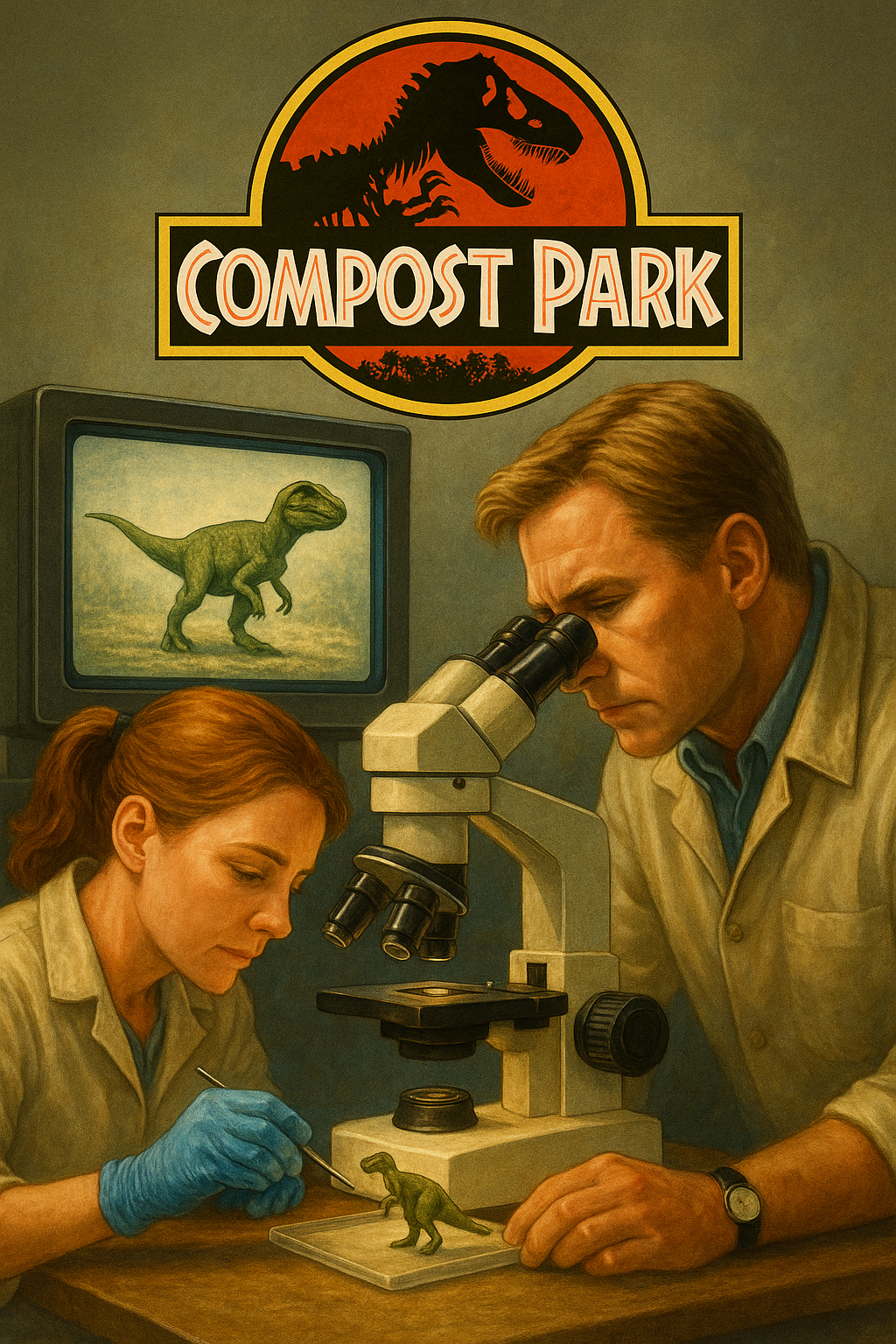
If microbes were as tall as dinosaurs, would people start paying attention? They were here before dinosaurs, and they’re still here now. They are worth paying attention to – not just as “germs” but as the drivers of soil and human health.
For backyard composters, understanding microbes helps you troubleshoot. Pile not heating up? Your bacterial population might be struggling. Too smelly? Might be anaerobic conditions favoring the wrong microbes. Compost taking forever? You might not have enough microbial diversity to speed the process. The invisible world is giving you feedback if you know how to listen.
For commercial operations, microscopy can be quality control and product differentiation rolled into one. You can verify that your process produces the diverse microbial communities your customers need. You can differentiate your product in the market based on biological activity, not just NPK numbers. In a world where everyone claims their compost is “high quality,” being able to prove yours is actually alive gives you a real advantage.
For farmers, knowing what’s alive in your compost means knowing what you’re adding to your soil.
A compost rich in fungal hyphae will build soil structure differently than bacteria-dominated compost. Both have their place, but understanding the difference lets you apply them strategically. The orchard needs different biology than the vegetable bed. The microbes know this. Now you can too.
This transforms your soil ecosystem because:
- Organic matter holds 20 times its weight in water
- Increases surface area for beneficial microbes to thrive
- A complete soil food web stacks metabolites
- Microbes mine nutrients naturally present in soil – that includes nitrogen, phosphorus, potassium, and many more
- Plants become more disease-resistant and nutrient-dense
- Synthetic input costs drop – It cuts costs while protecting the environment.
- Local production from organic waste streams: Reduces mining, synthesis, and global transport.
- Prevents nutrient runoff that’s negatively impacting our waterways.
The question isn’t whether compost can replace synthetic fertilizers in water-soluble NPK delivery. It’s whether we’re ready to work with natural systems instead of against them. That means working with microbes.
The Astronomical Diversity Problem
Here’s something that keeps me up at night: science has its own limitations in tackling soil microbe diversity, and those limitations are rooted in statistics. The possibilities of microbe and plant combinations quickly exceed our capacity to keep measuring.
Think about how many variables are at play. The test setup grows exponentially, approaching millions of combinations. It’s impossible to prove them all in the field. It’s hard to truly measure the diversity of compost and soil microbes.
Measuring chemicals is much simpler. That’s where synthetic fertilizers still have a leg up. The regulatory language around them has had over 70 years to evolve. It takes time for microbial-based farming to build similar standards and widely accepted benchmarks.
But we’re getting there. Every researcher documenting microbial communities, every farmer running trials, every composter with a microscope – we’re all contributing to that knowledge base. It’s water on the wheel that keeps turning progress.
Microbial diversity is astronomical. Science can barely catalogue what exists, let alone predict all the interactions. But that’s not a weakness of the biological approach – it’s actually its strength. Natural systems are resilient precisely because they’re complex. They can adapt, respond, and self-correct in ways that simplified chemical systems simply cannot.
This is why I keep showing up, keep posting, keep teaching. Someone needs to translate between these two worlds – the visible and the invisible, the simple and the complex, the chemical approach and the biological one.
What You Can Do Now
The microscope is essential for composters, and it’s always fun to look at other things up close too. My daughter and I look at leaves, pond water, fabric fibers, anything we’re curious about. But compost remains the most fascinating slide.
Have you ever spotted a tardigrade or explored the life teeming in your compost? It’s amazing what you can find when you take a closer look. You don’t need to become an expert overnight. You just need to start seeing.
Do you have a microscope at home? If not, a basic student microscope costs less than a decent compost thermometer and will teach you more about what’s actually happening in your pile than any temperature reading ever could.
Start simple. Take a sample from your active compost. Mix it with water. Look. See what’s moving. See what’s alive. Let yourself be amazed.
Then share what you see. Post about it. Tell your neighbors. Show your kids. Translate the invisible world for someone else. Because here’s the truth: the microbes can’t post on the internet. That’s why we have to do it for them.
I’ve been doing this for years now – creating content, sharing discoveries, connecting composters across continents. I’ve been called “The compost professor”. I’ve been invited to five continents because I refuse to let this knowledge stay hidden. I inspire others to publish regularly, and together we’ve reached millions of people with composting.
It works for me. It’ll work for you. And it works for composting and soil microbes.
The Bigger Picture
After posting over 1,360 times on LinkedIn, I’ve learned something: this isn’t really about composting. It’s about making the invisible visible. It’s about translating between worlds. It’s about helping people see magic that’s been there all along.
There’s a parallel universe in every spoonful of compost. More organisms than people on Earth. More complexity than we can fully comprehend. More potential than we’ve barely begun to tap.
Composting education is a never-ending marathon. It’s slow, difficult work. Old habits die hard – we carry deep patterns inside us, and even after months of building new ones, the old ones still live within.
That’s why raising awareness about composting, food waste diversion, and soil microbes is such a monumental task. I’m helping facilitate pattern changes. Getting people to see what they couldn’t see before. To value what they previously ignored. To work with systems they didn’t know existed.
Composters are soft people in a hard world. We see value in wasted materials. We see potential in recovering nutrients. We collaborate with invisible beings. We start mission-focused businesses to reduce wasted food and wasted waste. Sometimes it feels like self-flagellation, choosing this path over more lucrative ones. But we do it for a calm consciousness and a living planet.
If you’re working in this space too – in composting, in soil education, in food system change – let’s connect. Let’s join forces. We’re stronger together. As someone who connects with composters, farmers, food waste reducers, equipment manufacturers, and organizations across continents, I bring all of that experience into my work.
The invisible world is waiting. Once you’ve been down there with the microbes, you’ll never see the world the same way again.
And honestly? That’s exactly where I need you to be.
Because every day, I shine the light and remind people about the underused potential living beneath our feet. Every day, I translate between the visible and invisible. Every day, I work to make compost mainstream.
The microbes can’t do this work. But you can.
Author: Tim Steckel
Marketing strategist building America's organic recycling infrastructure through persistent advocacy. Daily storytelling, strategic outreach, and educational campaigns help organizations transform communities from waste-focused to soil-focused.
